
Are you looking for advanced analytical solutions in the field of chromatography? Then you've come to the right place! Today, we're diving into the fascinating world of gas chromatography (GC) and ion mobility spectrometry (IMS), exploring why they make a perfect match for enhancing analytical capabilities.
What is Gas Chromatography?
Gas chromatography is a powerful analytical technique used to separate and analyze compounds in a mixture. By utilizing a gas as the mobile phase, GC efficiently separates compounds based on their differential partitioning between a gaseous mobile phase and a liquid or solid stationary phase. Gas chromatography machines (learn more here) are widely used in various industries, including pharmaceuticals, environmental sciences, food and drink production, forensics, and medicine.
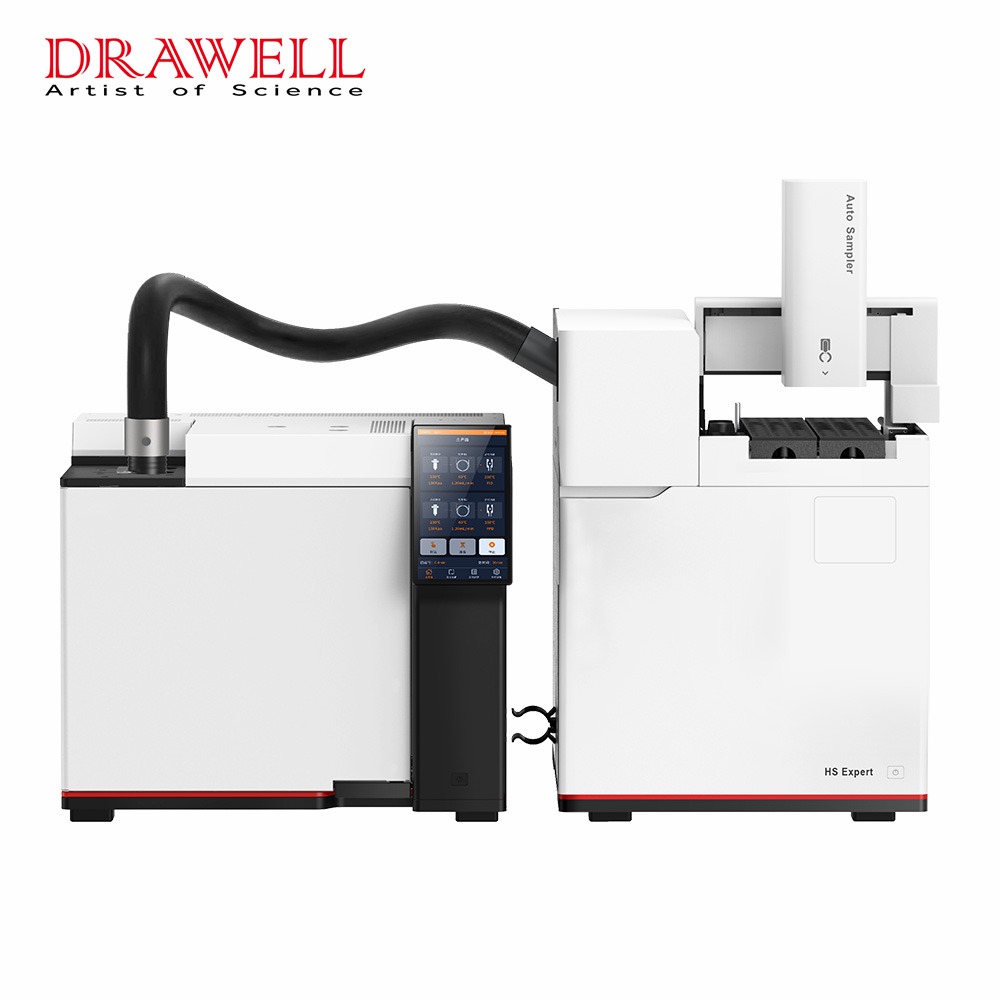
Introducing Ion Mobility Spectrometry
Ion mobility spectrometry, on the other hand, is a technique that separates and characterizes ions based on their motion through a neutral gas under the influence of an electric field. IMS has gained significant popularity over the past few decades due to its outstanding sensitivity and quick response times. It has been increasingly used as a detector for gas chromatographs, offering unique advantages that complement the capabilities of GC.
The Perfect Match: GC and IMS
In a recent article published by LCGC International, Ansgar T. Kirk and Tim Kobelt discuss the basic operating principle of IMS, its resulting strengths and weaknesses, and why it aligns perfectly with the capabilities of gas chromatographs. They argue that the combination of GC and IMS not only enhances analytical performance but also broadens the range of applications that can be tackled.
One of the key advantages of IMS is that it adds a second separation dimension orthogonal to GC, operating on a millisecond timescale. This provides 2D spectra similar to those from GC×GC, allowing for easy reconstruction of peaks in both dimensions. Furthermore, IMS can differentiate various ion species from each other, leading to improved selectivity and sensitivity.
Setting Up a GC-IMS Coupling
Setting up a GC-IMS system is relatively straightforward, thanks to the advantages offered by IMS. IMS requires no consumables apart from the drift gas, which can often be clean air or nitrogen, readily available in many labs. Additionally, the separation principle in IMS offers good orthogonality to many different stationary phases used in GC.
However, one of the challenges in setting up a GC-IMS system is peak broadening, which can occur if the IMS detector has a considerable interior volume. To mitigate this, researchers have developed specialized drift tube designs with low internal volume and optimized gas flow schemes. These advancements have led to the development of high-performance GC-IMS systems capable of analyzing complex mixtures with high resolution and sensitivity.
Future Developments
The field of GC-IMS is constantly evolving, with new developments promising even greater analytical capabilities. For instance, research is ongoing to develop IMS capable of measuring both positive and negative ions simultaneously, eliminating the need to run the same sample twice. Additionally, the miniaturization of both GC and IMS has led to the realization of handheld multidimensional analysis systems, offering the convenience of portability without compromising performance.
Conclusion
In conclusion, the combination of gas chromatography and ion mobility spectrometry offers a winning combination for analytical excellence. With its unique advantages in terms of sensitivity, selectivity, and speed, GC-IMS is poised to revolutionize the field of analytical chemistry. Whether you're working in pharmaceuticals, environmental sciences, or any other industry that relies on accurate and efficient analytical solutions, GC-IMS is worth considering for your next project.
For more information on gas chromatography machines and the latest advancements in GC-IMS technology, visit Drawell Scientific and Chromatography Online today!